Post-Impressionism1892
At the Moulin Rouge
Henri de Toulouse-Lautrec
Curator's Eye
"The most striking aspect is the face of May Milton in the foreground on the right, lit from below by a spectral green light that evokes the effects of gas lighting and the alienation of the party."
A raw dive into the heart of Parisian nightlife, this Post-Impressionist masterpiece captures the toxic and fascinating atmosphere of the famous Montmartre cabaret. Toulouse-Lautrec depicts his friends and himself with a mix of melancholy and biting irony.
Analysis
At the Moulin Rouge is much more than a simple genre scene; it is a psychological group portrait where each figure seems locked in their own solitude despite the proximity of the venue. In the center, around a table, we recognize the regulars of Lautrec's circle: writer Édouard Dujardin, dancer La Macarona, and photographers Paul Sescau and Maurice Guibert. Their faces, marked by weariness, contrast with the supposed bustle of the cabaret, highlighting the hidden and often gloomy side of Parisian pleasures during the Belle Époque.
The artist uses a bold and acidic color palette, typical of his break with classical Impressionism. The electric green sweeping across the woman's face in the foreground and the orange reflections of the wood create an artificial and suffocating atmosphere. This light is not natural; it symbolizes the electricity and gas that transform bodies and faces once night falls, giving the partygoers the appearance of tragic masks or ghosts.
The work functions as a sociological testimony of Montmartre, a neighborhood then in full mutation. By including real and identifiable characters, Lautrec documents "bohemia" not as a romantic ideal, but as a tangible reality made of ephemeral encounters and shared melancholy. The painting captures that precise moment when the party tips into boredom, a theme dear to the artist who frequented these establishments daily to escape his own physical and social condition.
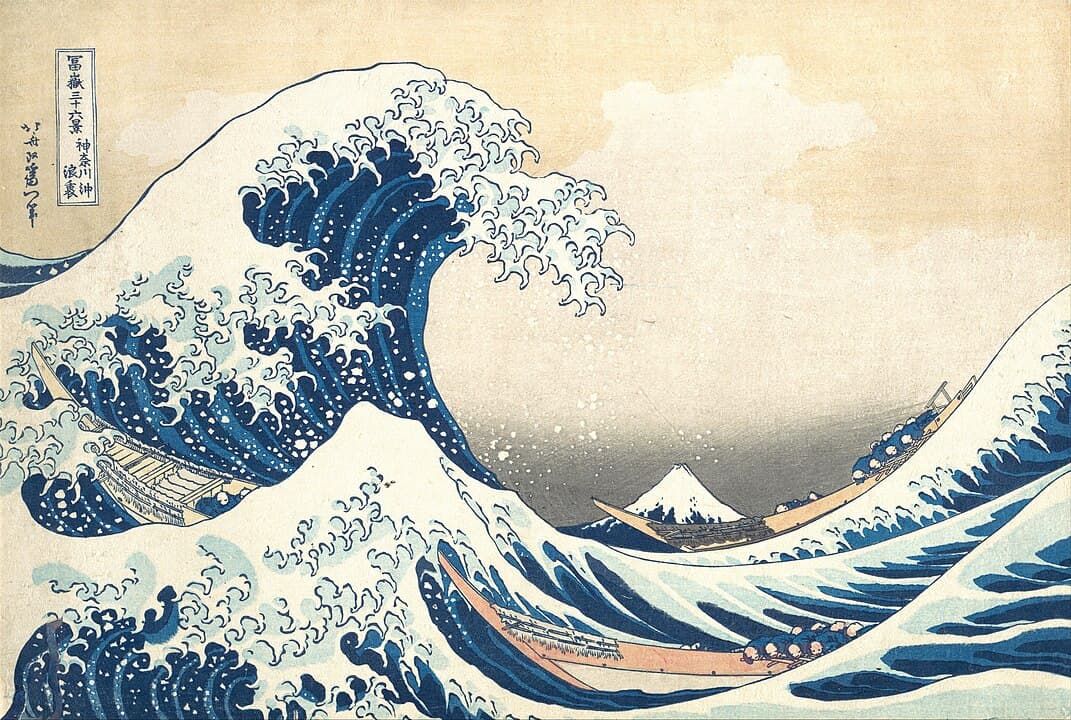
The influence of Japanese prints (ukiyo-e) is manifest in the treatment of forms and the boldness of the framing. Lautrec simplifies silhouettes and uses marked contour lines to detach the characters from the background. This stylization, combined with a quick and sometimes nervous pictorial touch, gives the painting a vibrant energy. The space seems to close in on the spectators, inviting us to take a seat at this table of magnificent outcasts.
Join Premium.
UnlockQuiz
What physical characteristic of the canvas reveals a major modification of the original composition by Toulouse-Lautrec to heighten the viewer's immersion?
Discover