Classicism1635

The Abduction of the Sabine Women

Nicolas Poussin

Curator's Eye

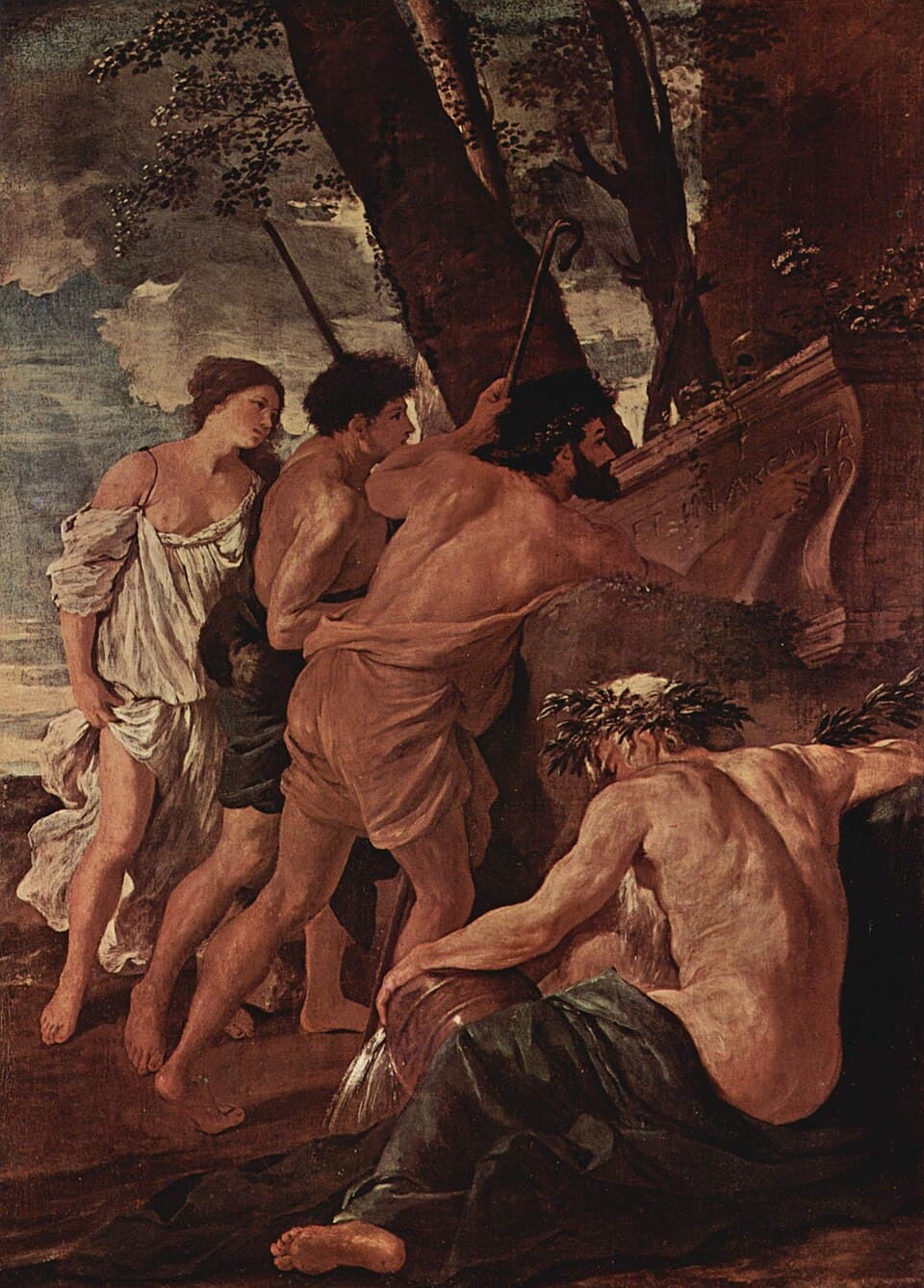
"The painting depicts the moment when Romulus, founder of Rome, raises his cloak to give the signal for the abduction of the Sabine women during a religious festival. In the foreground, Roman soldiers seize the women in a choreography of struggle and despair. Of particular note is the opposition between the panic of the victims and the impassivity of the classical architectural structures in the background, which symbolize the future stability of the Roman city."

A manifesto of French Classicism, this work by Nicolas Poussin illustrates the founding episode of ancient Rome with unprecedented intellectual rigor. Through theatrical staging and strict geometric discipline, Poussin transforms violent chaos into a meditation on reason of state, historical necessity, and moral order. It is the triumph of line over color, and of the mind over pure emotion.

Analysis
Deep analysis of this canvas reveals Poussin's ambition to rival the great models of Antiquity and the Renaissance. Historically, the work belongs to the period when the artist, settled in Rome, developed his "heroic" style. It is not merely a mythological narrative, but a reflection on the foundation of a civilization through force. Poussin's technique here is exemplary: he uses a precise touch and primary colors (blue, red, yellow) to structure the space and direct the eye through the fray. The mythological context is based on the texts of Plutarch and Livy. The myth tells that the first Romans, lacking women, invited the Sabines to games to better plunder them. Poussin treats this subject with a complex psychology. Each group of characters embodies a different emotion: maternal terror, physical resistance, or forced submission. This human diversity is nonetheless subject to a superior will—that of Romulus, who dominates the scene from his pedestal, acting as a divine director. Stylistically, Poussin rejects the disordered tumult of contemporary Italian Baroque in favor of absolute narrative clarity. He worked with small wax figurines arranged in an optical box to study light and shadow, a method that confers a sculptural, almost marmoreal quality to his characters. This technique allows for a "decorum" where every gesture possesses a precise rhetorical meaning, transforming the image into a legible visual text. Finally, the work explores the tension between the savagery of the act and the nobility of the form. Poussin seems to suggest that art has the power to magnify horror to extract a universal truth. The presence of imaginary temples and basilicas in the middle ground suggests that from this crime, Empire, law, and peace will be born. It is a Stoic vision of history where individual sacrifice is the price of collective greatness.
The Secret
A fascinating secret concerns Poussin's creative method. X-ray analyses have confirmed the use of the "grande machine": he built a stage model with articulated figurines to freeze poses. Scratch marks have been discovered on the canvas preparation, showing how the artist adjusted the architectural perspective with geometric precision. Every building is rigorously aligned with a central vanishing point, creating a striking contrast with the human agitation. Another anecdote reveals the influence of ancient sculpture on the faces. The expressions of terror of the Sabine women are not drawn from real-life observation but are direct citations of ancient tragedy masks and Roman reliefs that Poussin studied daily in Rome. This organic link with archaeology makes the painting an object of knowledge as much as visual pleasure. Finally, a recent discovery during restoration highlighted the chromatic symbolism. The bright red of Romulus's cloak is not a simple aesthetic choice; it is an expensive pigment symbolizing sacrifice and imperial power. Conversely, the blue used for certain dresses is colder, marking the emotional distance and purity of the victims. These pigment choices were carefully considered to reinforce the work's political message.

Join Premium.

Unlock
Quiz

What gesture by the character in red (Romulus) gives the signal for the abduction?
Discover
Institution

Metropolitan Museum of Art

Location

New York, United States