Romanticism1824
The Sea of Ice
Caspar David Friedrich
Curator's Eye
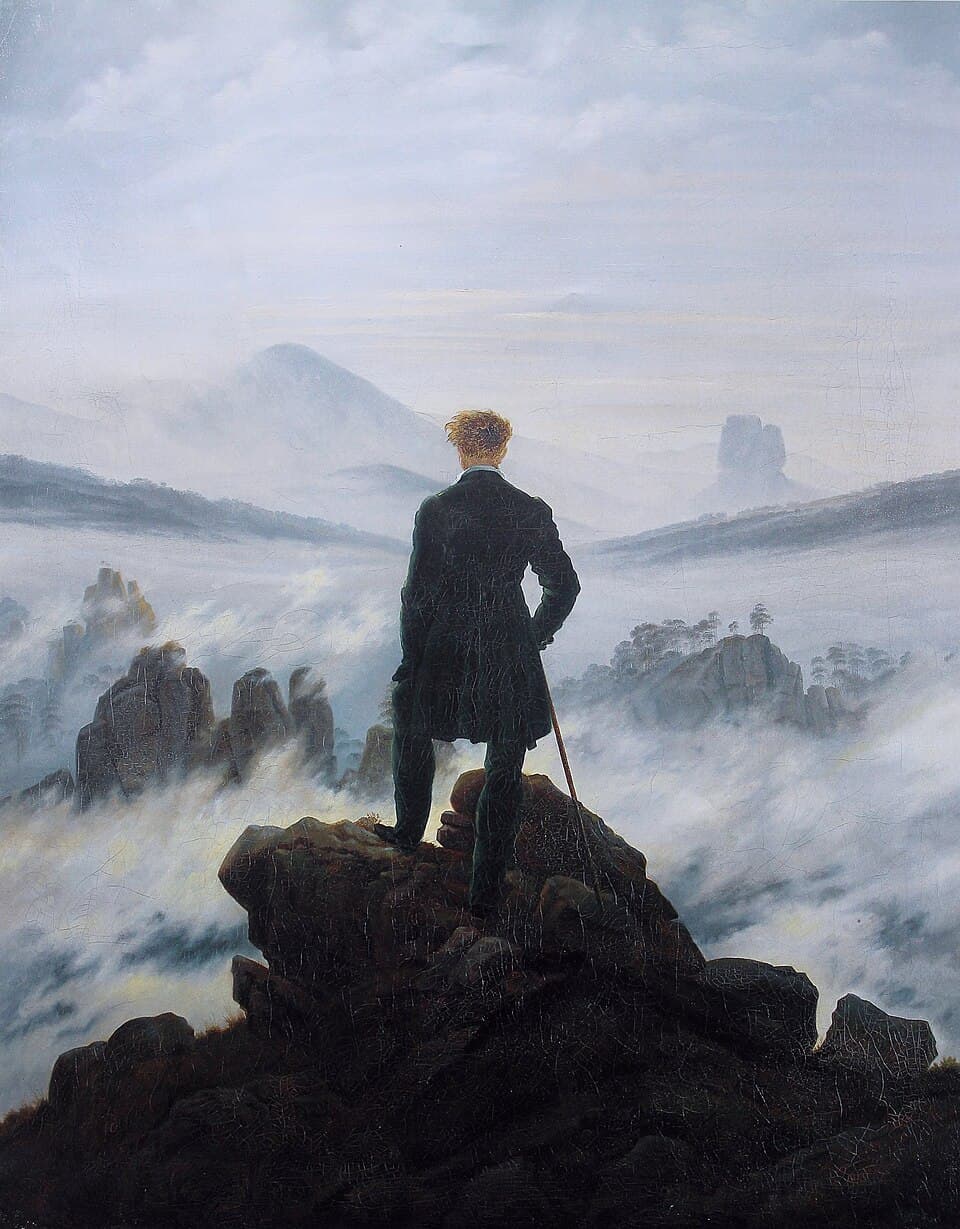
"Observe the ice floes rising like monolithic steles, forming a pyramid of chaos. At the bottom right, the stern of the ship "Griper" is almost completely crushed, reminding us of the insignificance of technology against the elements."
A terrifying polar shipwreck where the raw force of nature crushes all human ambition. This radical work embodies the concept of the Sublime, transforming a maritime failure into a metaphysical allegory of divine indifference.
Analysis
Painted in 1824, this canvas was inspired by William Edward Parry's Arctic expedition seeking the Northwest Passage. Friedrich does not seek to illustrate a news item, but to capture the essence of despair in the face of a sovereign and motionless nature. The painting is a testament to the "Sublime" sentiment dear to Kant and Burke: a beauty that frightens by its excess and destructive power. Here, man is totally physically absent, giving way to an architecture of ice that seems more permanent than any civilization.
In-depth analysis reveals a deep spiritual dimension specific to the artist's Lutheranism. The ice, far from being mere inert matter, becomes a symbol of eternity. The shipwreck represents the finiteness of earthly existence and the failure of human pride (hubris). This work was met with misunderstanding in its time, judged too cold and abstract, as it rejected the usual codes of the picturesque landscape for an aesthetic of pure desolation.
On a mythological and symbolic level, the work evokes the myth of nature as a sacred and impenetrable temple. Unlike the idyllic Italian landscapes of his contemporaries, Friedrich offers a "Northern landscape" where divinity does not manifest in gentleness, but in the implacable rigor of frost. It is the myth of an "autonomous" nature, which does not need man to exist and which always ends up reclaiming its rights over mechanical intrusions.
Finally, the political context of the Restoration in Germany weighs on the work. One can see in it a metaphor for the stifling of freedoms and national hopes under a reactionary leaden cloak. The broken ship is fragmented and motionless Germany, trapped in the ice of authoritarian conservatism. Friedrich thus uses the Arctic nature to scream a deafening political silence.
Join Premium.
UnlockQuiz
Beyond William Parry's polar expedition, what personal trauma and technical study guided Friedrich in the design of this pyramidal ice structure?
Discover