Middle Ages1305
The Nativity
Giotto
Curator's Eye
"Mary, lying under a rocky shelter, contemplates the Child while angels hover above the scene and shepherds receive the divine revelation."
A masterpiece of the Early Renaissance, this fresco marks the invention of Western naturalism by infusing the biblical narrative with emotion and three-dimensionality.
Analysis
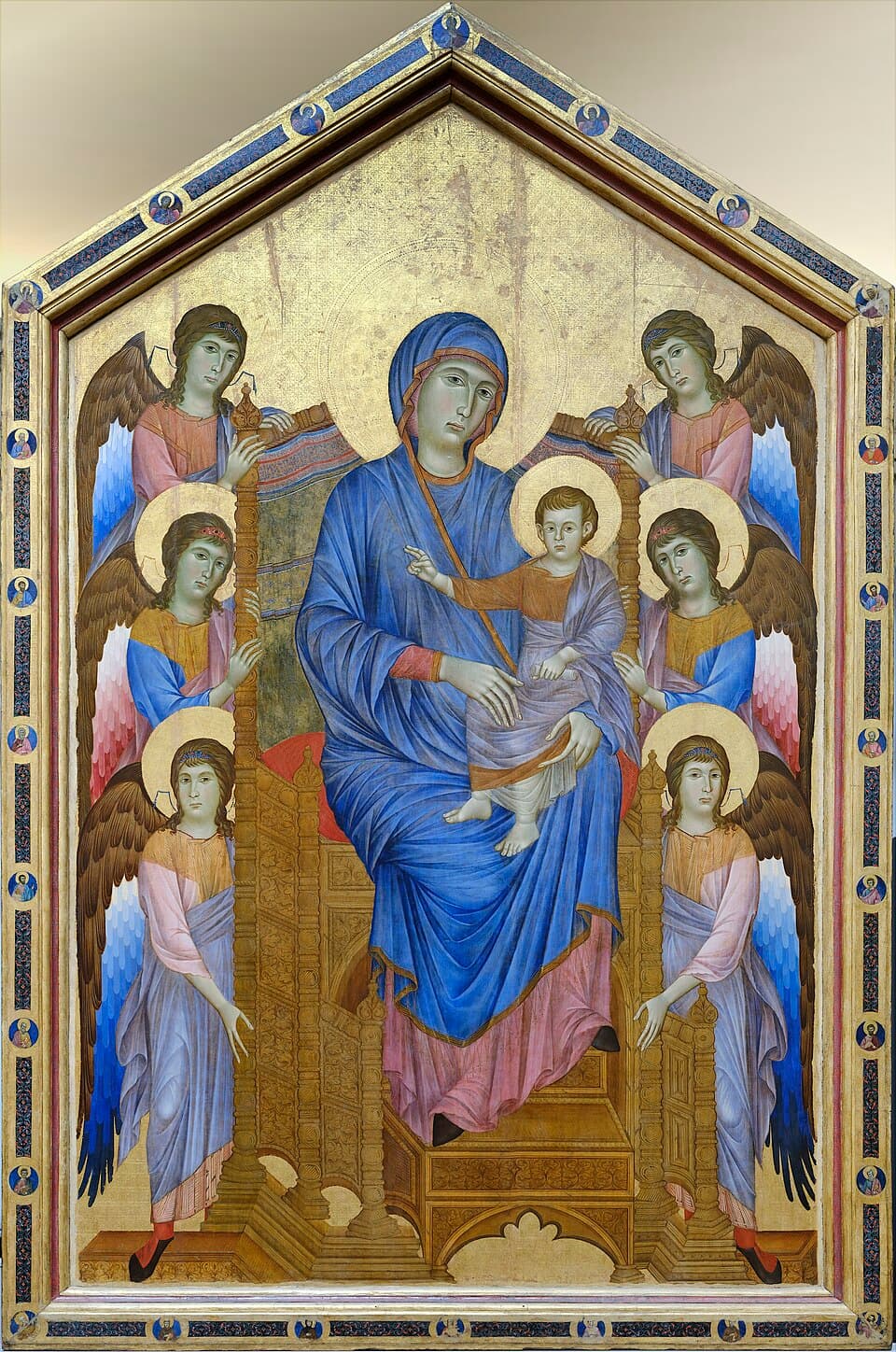
Executed around 1305 in the Scrovegni Chapel in Padua, Giotto's "Nativity" represents a major epistemological break with the Byzantine tradition of the Trecento. The historical context is that of an Italy in full mutation, where the rise of cities and the merchant class called for a more human and accessible spirituality. Giotto abandoned rigid hieratism and abstract gold backgrounds to anchor the divine in a tangible earthly reality. This shift from medieval symbolism to proto-humanism is the cornerstone of the Renaissance, making Giotto the "father of European painting" in the words of Vasari.
The mythological context, or rather the Christian exegesis represented here, relies on the Gospels but integrates an unprecedented affective dimension. The scene does not merely illustrate the dogma of the Incarnation; it portrays maternal tenderness. The myth of the divine birth is humanized: Mary is no longer a distant icon, but a woman exhausted by childbirth, turning her body with effort to entrust her newborn to a servant. This humanization of the sacred allows the faithful to identify with the divine through empathy, transforming the theological narrative into a direct and universal emotional experience.
Technically, Giotto revolutionized space through the use of "a fresco" painting on fresh plaster, allowing for a durable fusion of pigments. He introduced a revolutionary volumetry through chiaroscuro, giving bodies a heaviness and physical presence that art had not known since Antiquity. The management of drapery, which emphasizes anatomical forms rather than hiding them under decorative patterns, bears witness to an acute observation of reality. The space is structured by a rocky relief that creates scenographic depth, prefiguring the invention of linear perspective.
Psychologically, the work explores the spectrum of interiority. Each character expresses a specific state of mind: the protective fatigue of the Virgin, the meditative perplexity of Joseph sleeping in the foreground, and the ethereal exaltation of the angels. The presence of animals, the ox and the ass, is not only symbolic but adds a touch of everyday life that reinforces the naturalism of the scene. Giotto succeeds in capturing the suspended moment where the time of human history meets the eternity of the divine, creating an atmosphere of silent contemplation of unprecedented psychological intensity.
Join Premium.
UnlockQuiz
In which famous Italian chapel is this fresco located?
Discover