Impressionism1880
Woman at Her Toilette
Berthe Morisot
Curator's Eye
"Note the virtuosity with which Morisot treats the mirror: it doesn't just reflect the face but absorbs the entire atmosphere of the room. The boundary between flesh, satin dress, and glass dissolves into pure luminous vibration."
A masterpiece of Impressionist intimacy, this 1875 canvas captures a suspended moment of grace where light and matter merge. Morisot asserts her genius for the free stroke, transforming a daily ritual into a symphony of whites and silver reflections.
Analysis
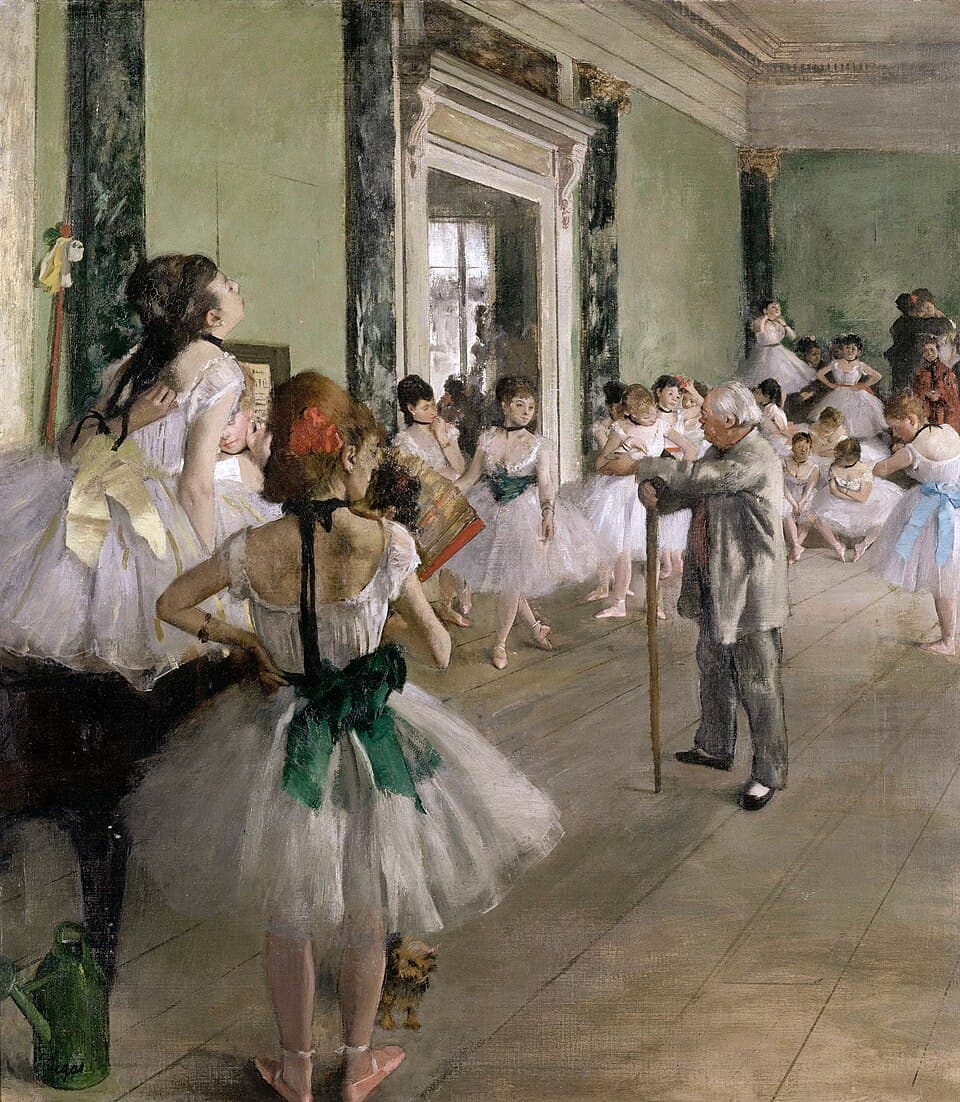
In this work, Berthe Morisot explores the theme of the "toilette," a favorite subject of the Impressionists, but she does so with a specifically feminine sensitivity that avoids all voyeurism. Unlike her male colleagues like Degas, Morisot paints introspection here. The young woman, seen from behind, does not offer herself to the viewer's gaze but concentrates on her own reflection, creating an inviolable bubble of intimacy. This approach redefines the genre scene by introducing a profound psychological dimension.
The palette is a lesson in colorism. Morisot uses an infinite variety of shades of white, pearl gray, and pale blues to structure the space. These "non-colors" capture natural light that seems to emanate from the canvas itself. The model's blonde hair, pinned up with natural elegance, becomes the warm focal point that balances the apparent coolness of the surrounding hues. Each brushstroke is an affirmation of stylistic independence.
The artist plays with the ambiguity of textures. The satin of the dress, the powder box on the table, and the young woman's skin are treated with the same speed of execution, creating a visual unity where everything seems in motion. This technique, often criticized at the time as "unfinished," is actually a daring attempt to seize the immediacy of sensation. Morisot does not paint objects; she paints the air circulating between them.
Finally, the work is part of a tradition dating back to the French 18th century, recalling the boudoir scenes of Fragonard, but stripped of their erotic frivolity. Morisot anchors her character in late 19th-century bourgeois modernity, where the bedroom becomes the sanctuary of the modern woman. It is a celebration of domestic life not as a constraint, but as a space for poetic freedom.
Join Premium.
UnlockQuiz
What technical peculiarity, considered revolutionary and subversive at the time, did Berthe Morisot employ in the treatment of the dress and background of this work?
Discover