Abstract Art1910
First Abstract Watercolour
Wassily Kandinsky
Curator's Eye
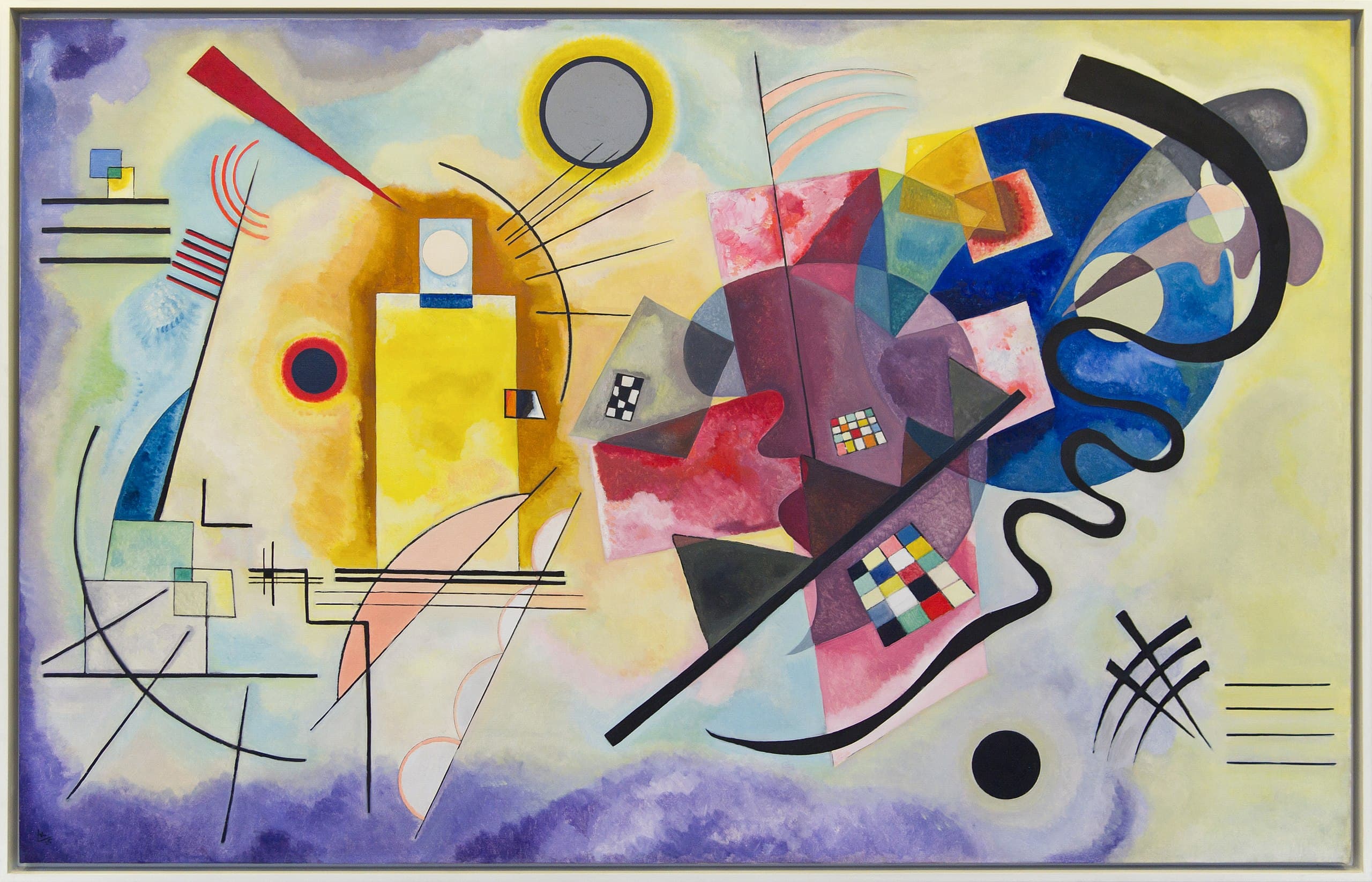
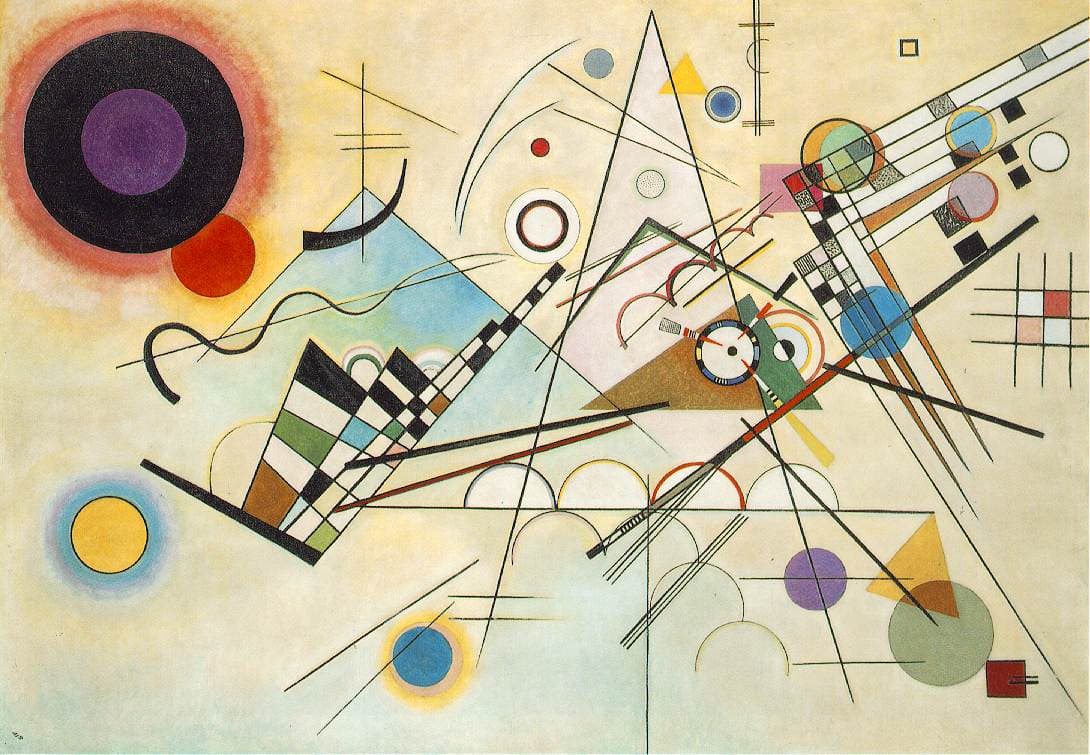
"The total absence of an identifiable subject gives way to a choreography of spots and lines, where each pigment seems to vibrate according to its own musical frequency."
A historic birth certificate where Kandinsky definitively breaks with figuration to release the spiritual power of color. This watercolor marks the transition from art that describes the world to art that expresses the soul.
Analysis
Created in 1910 according to the artist's signature, this work is considered one of the first conscious gestures toward pure abstraction in the history of Western art. Kandinsky, influenced by his research on theosophy and the music of Schoenberg, sought to reach an "inner necessity" that no longer depended on the reproduction of the visible world. He postulated that color possesses its own autonomy, capable of directly touching the human soul without going through the intellect or the recognition of an object.
The work belongs to a period of transition where Kandinsky refined his expressionist landscapes of Murnau to keep only their emotional backbone. One can still sometimes guess, through persistence of vision, the shapes of hills or steeples, but here they are dissolved in a storm of liberated gestures. The artist does not paint what he sees, but what he feels in the face of cosmic forces, transforming the canvas into a psychological and spiritual experience.
The intellectual context of this creation is marked by the imminent publication of his treatise "Concerning the Spiritual in Art." Kandinsky explains his theory of synesthesia: for him, colors have sounds and textures. Yellow resonates like a trumpet, blue like a cello or a deep organ. This watercolor must therefore be understood as a visual score where the harmony and contrast of tones create a psychic resonance in the viewer.
This watercolor is also an act of courage in the face of the critics of the time who considered the absence of subject as mere decoration or madness. For Kandinsky, it is on the contrary an elevation of art toward its purest level, freeing it from the "prison of matter." It foreshadows his great series of "Compositions" and "Improvisations" that would redefine the limits of visual creation in the 20th century.
Join Premium.
UnlockQuiz
What major historical controversy surrounds the handwritten "1910" date placed by Kandinsky on this watercolor?
Discover